

Tuesday, May 31, 2011
Ben Cohen Retires
 Ben Cohen is retiring to spend more time on the cause to stop bullying and homophobia. What a man!

Obama In Dublin
 Got to see Obama in Dublin last week and then had to head right out to sea for a few days. He seemed to be very popular here and even won over more fans when he drank almost a full glass of Guinness.

Monday, May 23, 2011

Friday, May 20, 2011
Heineken Cup Final


 Gordon D'Arcy and Leinster will face the Northampton Saints in Saturday's Heineken Cup final at the Millennium Stadium, Cardiff in a match up that includes six Irish national players.
Bloody Sunday Remembrance

On 21 November 1920, during the War of Independence, 13 spectators and one player were killed when British forces opened fire at a football match at the home of Gaelic sports at Croke Park.
Earlier that day, IRA assassination squads had shot dead 14 suspected British intelligence agents in Dublin.
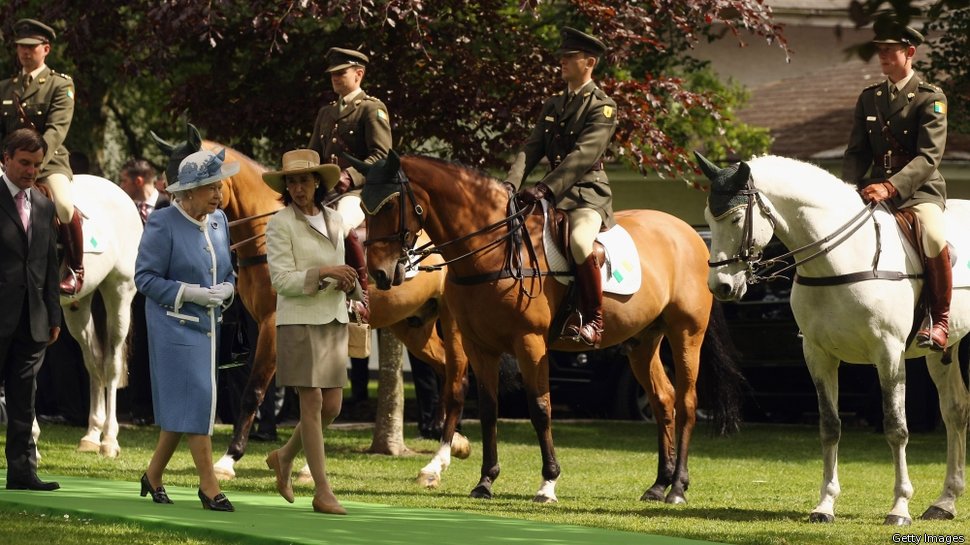
During the first visit by a British monarch to Ireland in 100 years, Queen Elizabeth visited Croke Park stadium in Dublin.
The Queen was met at the main entrance of Croke Park by Gaelic Athletic Association president Mr Cooney and President Mary McAleese, who is hosting the visit.
A display of Irish set dancing was followed by a meeting with GAA officials.
The BBC royal correspondent Peter Hunt said the Queen walking out on the hallowed nationalist turf at Croke Park represented "the once unimaginable becoming the norm".
Addressing the Queen, Mr Cooney said the visit would underpin and advance the peace process and "go down in the history of the GAA. Your presence does honour to our Association, to its special place in Irish life, and to its hundreds of thousands of members."
The Queen was presented with a limited edition book outlining the GAA's history, and Prince Philip was presented with a hurley stick and a sliothar (hurling ball), with the aside that he should use it "in the back garden".
Dublin footballer Kevin Nolan, who was one of four players from across Ireland to meet the Queen at Croke Park, told Radio Ulster's Evening Extra it was a "great honour" to represent the GAA at the event.
Her speech at Wednesday's state dinner is likely to acknowledge past UK-Irish difficulties without offering an apology, he added.
A Moment Of Silence And Respect


A day after Queen Elizabeth paid respect to those Irish who died in the struggle against Britain for Irish freedom she attended a ceremony and laid a wreath honoring almost 50,000 soldiers at the Irish National War Memorial.
The Queen's attendance at the ceremony honoring the Irish soldiers who died in World War I reflects an aspect of history that has been troubling for her hosts.
For decades, when the focus of admiration was on the rebels who fought and died in the 1916 Easter Rising, the soldiers' contribution went unrecognized.
Northern Ireland First Minister Peter Robinson, who was among the dignitaries at the ceremony, said: "Everyone remembers the past but we have to look to the future, but there are clear indications as a society - in the UK and Republic - people are moving on.

Wednesday, May 18, 2011

Tuesday, May 3, 2011


Subscribe to:
Posts (Atom)